Home | Introduction | Towering buildings | Masterful curving construction | Fine details | Nuraghi across Sardinia
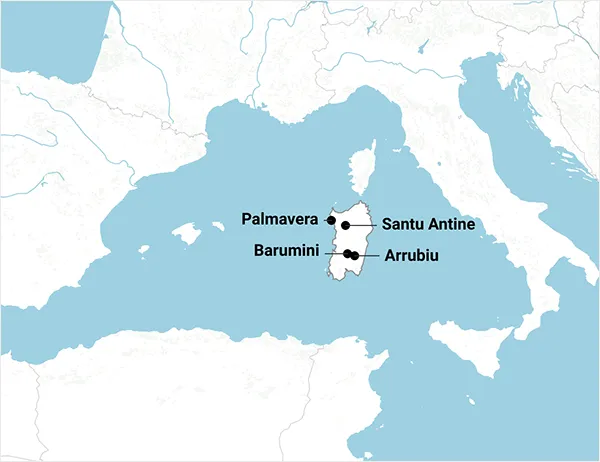
Among the 7,000 known Nuragic sites in Sardinia are these three remarkably preserved structures: Santu Antine and Palmavera (both dating to the fifteenth century B.C.E., and both in the northwest), and Arrubiu (which sits in the south and was inhabited from the fourteenth century until the ninth century B.C.E.).
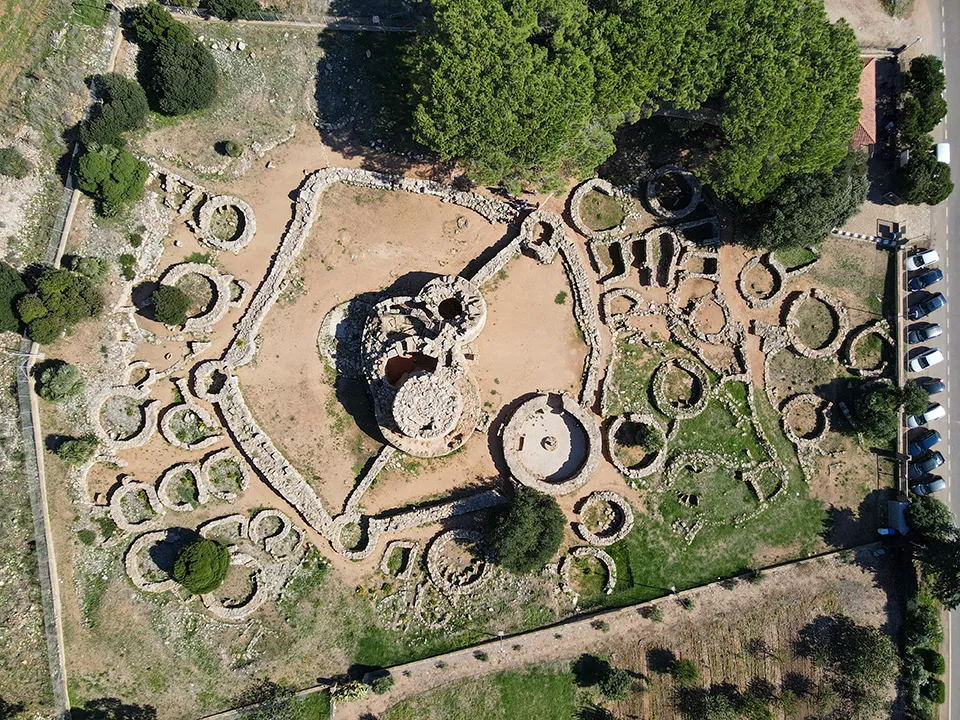
The Palmavera complex has a central portion with two towers, an ante-mural or defensive outer wall, and a village of about 50 huts. The largest of these is the imposing “meeting hut” used for political and religious gatherings.
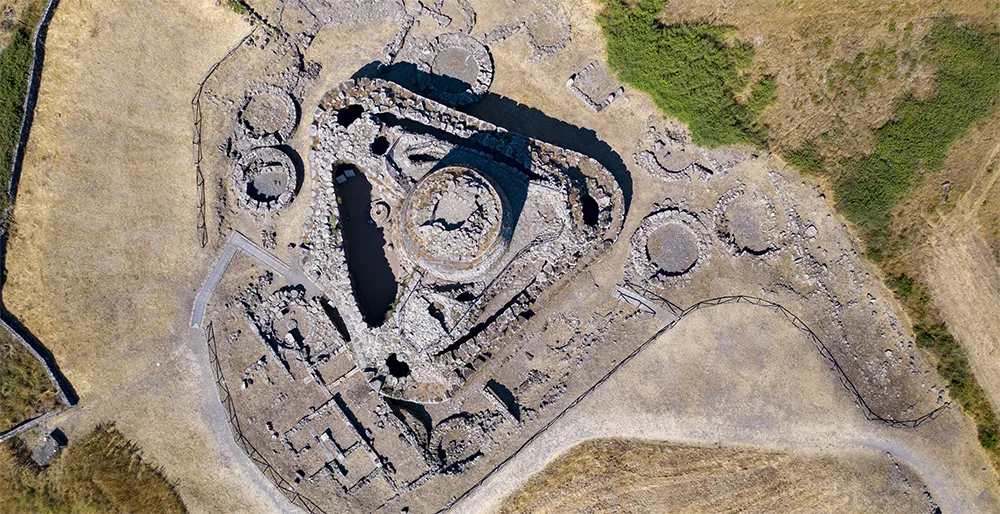
The nuraghe of Torralba’s Santu Antine complex is an example of peak Nuragic-age architecture. The complex is an equilateral triangle with a central tower (over 25 meters high, originally) and three other towers; it has long corridors and a central courtyard with a well. The symmetry and uniformity suggest that the creators worked from a unified design. The remains of the Nuragic village (occupied until the Roman era) are not yet completely excavated.
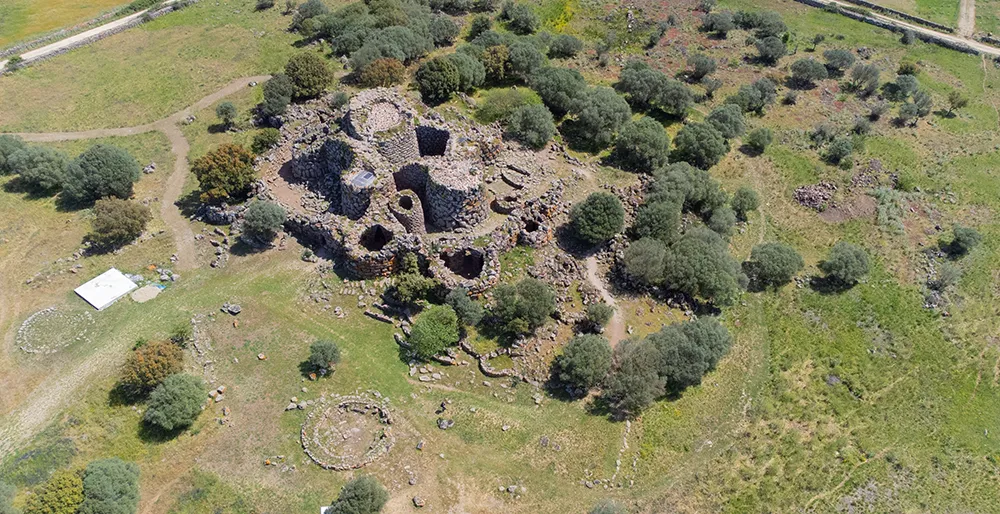
Arrubiu got the nickname “The Red Giant” because its huge walls are studded with red lichen. This community had far-flung connections, as shown by the ceramics that arrived here from the Peloponnese. Arrubiu was the stronghold of a vast territory that had numerous satellite nuraghi and several tombs with colossal statues.