Refuge in the Early Modern World: The Jewish Ghetto in Venice; Holocaust Remembrance 2025
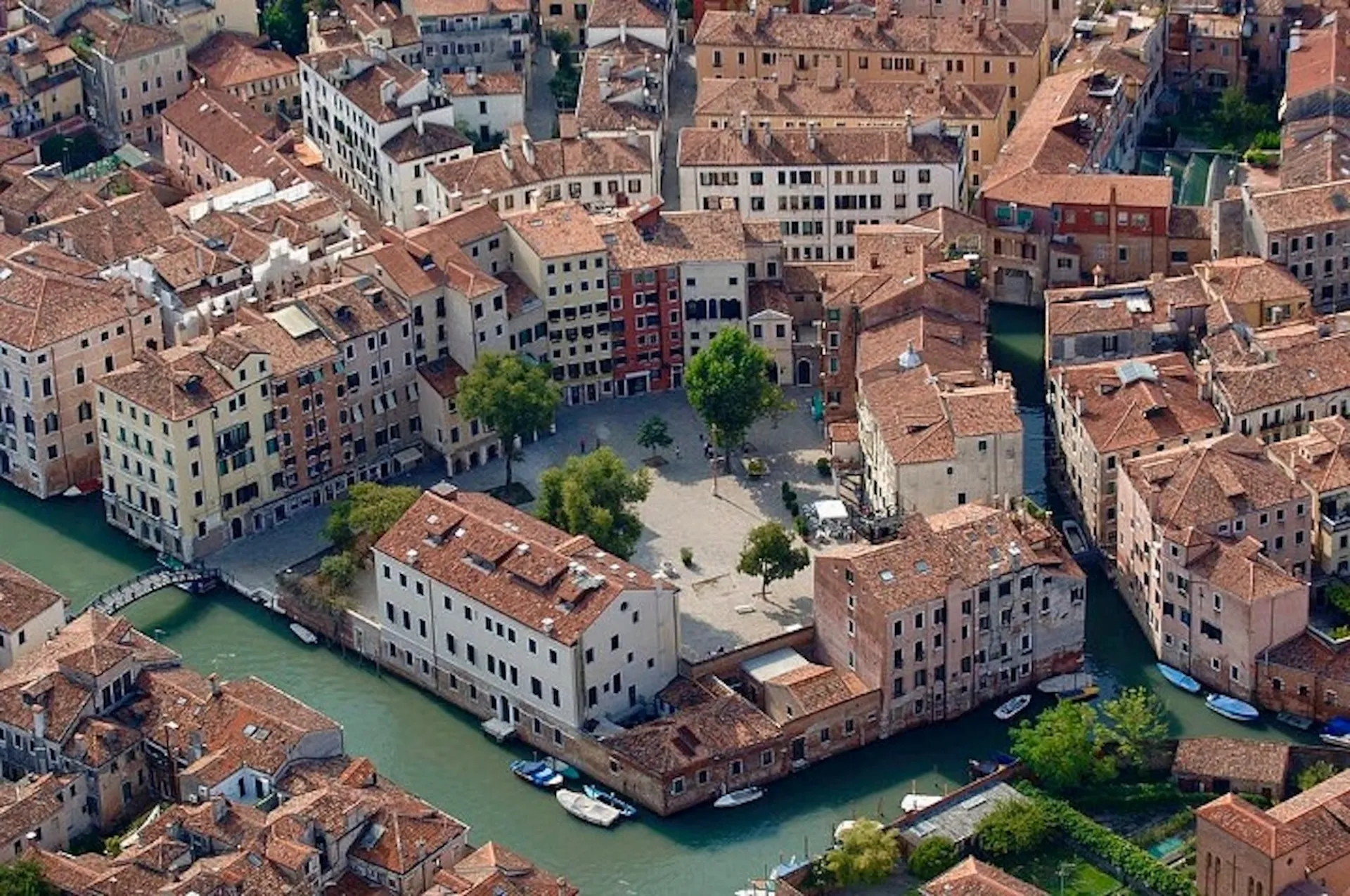

Read our new interview transcript below.
(This is not an in-person event; our commemoration today is the publication of this interview transcript.)
Federica Francesconi, Associate Professor in the Department of History at the University at Albany (SUNY), and the Director of the Judaic Studies Program, spoke last week with Barbara Faedda, Executive Director of the Italian Academy, about Venice's Jewish Ghetto in the Early Modern era—touching on displacement/belonging, transculturation, Jewish identity, the Shoah, and contemporary challenges.
Europe and the United Nations remember the victims of the Shoah each winter on the anniversary of Auschwitz’s liberation in 1945, and the Italian Academy marks Holocaust Remembrance Day annually with an exploration of issues of antisemitism, discrimination and crimes against humanity. Throughout the years, the Academy has broadened its focus to also explore groups that were targeted in the racism and xenophobia of the Nazi and Fascist regimes, and who were persecuted and killed in addition to the six million Jews. Of particular concern recently is the wave of antisemitism, historical denialism, and disinformation, and the manipulating of social media to promote neo-Nazi and neo-Fascist ideas. In this and other years, we have published fresh interview transcripts; on some occasions we have hosted public talks; read here about all the previous Remembrance Initiatives at the Academy since 2008.
Interview transcript: January 2025 exchange with Prof. Federica Francesconi
Barbara Faedda: In 1516 the first Ghetto in Italy was born when the Senate of the Serenissima Republic of Venice segregated the Jews from the rest of the city’s population in a neighborhood with high walls and gates that were closed at night. To start our conversation, I would like to ask you to give us a concise overview of the early presence of Jews in the area, before the establishment of the Ghetto, and what led to the persecution, discrimination, and confinement of the Jewish community in that city.
Federica Francesconi: An inquiry into the history of the Jewish presence in the Republic of Venice reveals unexpected discoveries. Some Jewish doctors were documented in Venice between the thirteenth and fourteenth centuries, yet Jews were officially barred from residing there until 1382, when a charter allowed moneylenders to operate for five years. Though it did not explicitly mention Jews, most beneficiaries were Jewish. In 1387, a ten-year charter was issued specifically for Jewish moneylenders, who provided affordable credit to the urban poor rather than revenue for the treasury. Despite religious prohibitions on lending with interest, Jews often had no other means of entry into cities. Small groups of Jewish families accompanied moneylenders, engaging in trades like baking, butchery, and teaching. In 1394, three years before the charter’s expiration, the Venetian Senate refused to renew it. By 1397, a law restricted Jews to stays of no more than fifteen days. Jewish life thus shifted to the mainland (Mestre, Padua, Treviso) and the stato da mar (Capodistria, Corfu). In the fourteenth century, Mestre became a major Jewish center with 150 members, a rabbinical tribunal, a synagogue, a yeshivah, and a cemetery. A multilingual Jewish community emerged, contributing to trade, literature, medicine, and book production. Notably, the Rothschild Miscellany was commissioned in Mestre (1478–1480), by Firzel Cohen Rapa.
A major change happened in 1509 when, as a result of the War of the League of Cambrai on the Venetian mainland, many Jews living there—and especially the moneylenders of Mestre and Padua—fled to the city of Venice for safety. In order to maintain their prosperous commercial trades in the Mediterranean, the Venetians granted privileges to a number of minorities such as the Germans, the Greek Orthodox, the Turks, and the Jews. Still, the Jews were considered “infidels” by Catholic theology and were the most controlled and restricted minority in Venice. Because of their status as polluters of the Corpus Christianum of the city, they had to live in a peripheral, confined area that would meet the approval of the Catholic Venetian society. The place chosen was an island (in the Cannaregio area) that once housed the municipal foundry and was thus called the getto (the word Ghetto derives from gettare, Venetian for casting or foundry metal). The ghettoization of Jews—aimed at rendering them invisible—was part of Venice’s broader effort to identify itself as the New Jerusalem through architectural renovations, a central theme in the city-state’s political mythology and widely reflected in sixteenth-century artistic iconography. Indeed, in 1516 the government of the Serenissima established the first Ghetto in the Italian peninsula as a compromise between the religious teachings of the Catholic state and its socioeconomic needs. First Italian and Ashkenazi Jewish moneylenders and then Sephardi merchants were allowed to settle in the Venetian Lagoon permanently, under the condition that their right to remain be governed by the repeated renewal of five-year and ten-year charters, respectively. To use the words of historian Benjamin Ravid, “the Ghetto was a compulsory, enclosed, and segregated neighborhood.” Despite a degree of internal autonomy, Jews remained under constant oversight by Venetian authorities, including the Cattaveri, the Cinque Savii alla Mercantia, and, after 1723, the Inquisitorato Sopra gli Ebrei. Additionally, they faced interference from other civic magistracies and Catholic institutions such as the Inquisition and the Neophytes’ House.
BF: The Venetian Ghetto held a range of Jewish groups from various parts of the Mediterranean basin. What was its impact on Jewish history and on early modern history in general? Was there diversity within the Ghetto?
FF: By the late fifteenth century, after expulsions from England, France, Germany, Spain, and Portugal, Northern and Central Italy became a refuge for Ashkenazi and Sephardi Jews. Even after the expulsions from Sicily (1492–93) and Naples (1510), Italy remained the only Western European region where Jews could live with relative stability. The forced conversion of Portuguese Jews in 1497 further displaced Jewish and New Christian communities, pushing them across the Mediterranean. In the sixteenth century, Italian Jews faced new pressures alongside migrants from the Ottoman Empire, Eastern Europe, and conversos from Iberia. The Counter-Reformation intensified these challenges. Under Pope Paul IV (r. 1555–1559), Jewish life was further restricted—the Talmud was publicly burned in 1553, and the infamous Cum Nimis Absurdum bull (1555) created the Roman Ghetto, limiting Jewish property ownership and economic activity. Ghettos soon spread across Italy, and conditions worsened for Jews in the Ottoman Empire by the early seventeenth century. Venice—with its trade networks and pragmatic policies toward minorities—became an attractive destination for Iberian and Levantine Jewish merchants. In the Venetian Ghetto, refugees on the move across Europe and the Mediterranean recovered and rebuilt their lives.
In 1541, following complaints from Levantine merchants about overcrowding, the Venetian government expanded the area of segregation: the Ghetto Nuovo now incorporated the Ghetto Vecchio across the canal. While originally intended as temporary lodging, many merchants settled there with their families. Seeking to boost commerce, Venice issued a charter in 1589 inviting both Ponentines (Iberian Jews) and Levantines (Ottoman Jews) to settle in the Ghetto as Jews. The Venetian Inquisition ceased persecuting conversos and crypto-Jews. Levantine and Ponentine merchants enjoyed significant economic freedom, even compared to other trading communities in Venice. However, legal norms, social codes, and restrictions on Jewish-Gentile relations still shaped their lives, as they did for all Jews. Within the Ghetto, diverse Jewish cultural traditions, devotional practices, and customs (minhagim) created distinct communal identities. Jews spoke, read, and wrote in Hebrew, Italian, Ladino, Yiddish, Spanish, and Portuguese. Italian, Ashkenazi, Sephardi, and Levantine Jews established their own cultural, social, and philanthropic institutions. While these communities maintained autonomy and sometimes competed, they also coexisted and occasionally merged.
BF: How did life develop in the Ghetto over its nearly three centuries (before it was dissolved in 1797)? Jews, of course, contributed enormously to the life of Venice in many ways, but where do you think the influence was most profound?
FF: As the Ghetto complex evolved over time, so did life within. In 1633, the Ghetto Nuovissimo was added to accommodate Levantine Jews, yet living conditions remained cramped. Despite this, Jews adapted by building upward, transforming the Ghetto into a “vertical city”—an architectural anomaly within Venice. Designed to isolate, its towering buildings paradoxically provided Jews with visibility and unique vantage points over the city. Nonetheless, overcrowding and architectural instability remained critical issues, severely impacting Jewish lives across all social classes.
By 1642, the three Ghettos housed 2671 individuals. Beyond commerce, Jews organized their own merchandise, communal and religious spaces. Those included bakeries, fruit vendors, butcher shops, and many others, as well as hospitality structures such as inns, a hospital for the poor, and a boarding house for Levantine travelers. Jews built at least eight synagogues—some providing services to distinct ethnic communities, others functioning as private oratories—whose anonymous exteriors concealed opulent Renaissance and Baroque interiors. Schools, confraternities, and charitable institutions flourished, supporting dowries for impoverished brides, ransoming captives, and engaging in kabbalistic rituals. These institutions fostered a vibrant intellectual and cultural life that extended beyond local Jews, connecting the Venetian Ghetto to the wider Mediterranean and Central Europe. Although the history of Venetian Jews in the eighteenth century remains largely unexplored, historians have noted that the Jewish community’s decline paralleled Venice’s own economic downturn. By 1737, the community was declared insolvent. With the arrival of Napoleon’s army in May 1797, a municipal council was established as the new government, the Ghetto gates were torn down, and Jews were freed from their restricted status. Like the Jews of Modena, whom I have previously studied, Venetian Jews navigated their path toward a new civil society through a gradual and uneven process—two steps forward, one step back.
Despite the banning of the Talmud following the promulgation of the Index of Prohibited Books (1596), Jews in Venice flourished across numerous disciplines. Literature, poetry, Kabbalah, jurisprudence, and music thrived, transforming the Ghetto from a place of confinement into a hub of creativity and resilience. Venice became Europe’s leading center for Hebrew book printing well into the eighteenth century. The walls of the Ghetto in Venice, as well as in the other Italian Ghettos, bound Jewish life in a permanent state of separation from the Christian world. Nevertheless, the walls did not bar a continuous exchange between the enclosed Jewish community and the society and culture outside. Perhaps the most famous intellectual was the eclectic rabbi, scholar, preacher, and poet Leone Modena (1571–1648) who educated generations of Jews and was admired by both Jews and Christians who visited the Ghetto to attend his sermons. He left, among other works, an autobiography that is a detailed account of his own vicissitudes (including his passion for gambling) and an exploration of Jewish realities in Venice and in Italy. In sixteenth- and seventeenth-century Venice, literacy and cultural practices were also shaped by gender. Jewish women and girls were quite active in textile handiwork in their own homes (spinning and embroidering). In doing so, at times they challenged women’s limited agency in the visible “public” space of the synagogue, the Ghetto, and the city. For example, in 1680–1681, Simḥah Levi Meshullam, a Jewish matron whose family owned a private synagogue, crafted an elaborate silk and metallic parokhet (Torah-ark curtain), now in the Jewish Museum of New York. It depicts the Tablets of the Covenant, Mount Moriah, and a Venetian-inspired messianic Temple. Signed and inscribed with Psalms 24:5, her work reflects Jewish women’s engagement with religious iconography, memory, and literacy, challenging traditional gender roles.
Certainly, these accomplishments in literature—particularly in Hebrew and Italian—along with achievements in commerce and craftsmanship by both men and women, greatly enriched Venice in many ways. However, their greatest success lies elsewhere. Despite the challenges of centuries-long isolation, Jews in Venice, across all social classes, succeeded in maintaining a unique identity—being Jewish, Italian, and Venetian simultaneously.
BF: How was Rome’s Ghetto similar to or different from the Ghetto of Venice? Rome’s Ghetto was designed to expedite conversion and cultural dissolution, but it had the opposite effect, according to historian Kenneth Stow. You wrote that, “despite the harsh conditions Jews had to deal with because of segregation, [the Ghetto of Venice] became socially, culturally, religiously, and ethnically one of the most fluid enclaves of the early modern world.”
FF: Unlike Venice, which devised pragmatic ways to admit Jewish merchants, the Papacy enforced strict ghettoization as a tool for conversion. The Roman Jewish community, already poor, faced increasing economic and professional restrictions after 1555, leading to further impoverishment. Despite their differing approaches, both Venice and Rome adhered to the canonical politics of balance—rather than expelling Jews, they segregated them to protect the Corpus Christianum from perceived contamination while paradoxically ensuring their permanent presence in the urban fabric, as historian Robert Bonfil astutely observed. The Venetian Ghetto embodied contradictions, caught between exclusion and necessity. The Republic sought to expand trade by increasing the presence of Jewish merchants yet feared that the “impure” Jews might cause “pollution.” Sociologist Richard Sennett aptly described the Ghetto as an “urban condom,” designed to shield Christian citizens from physical contact with Jews due to the government’s inherent weakness and its obsessive fear of mixing with the Other. To reinforce segregation, Jews were required to wear identifying markers whenever they left the Ghetto, according to a canon law dating back to 1215. By the sixteenth and seventeenth centuries, this took the form of a yellow or red hat, or (in the case of Levantine Jews) of a turban.
Yet, unlike other Jewish centers such as Amsterdam, Salonica, and Livorno, Venice uniquely combined disparate cultural, economic, and societal influences. Spanish and Portuguese Jews entered a Ghetto shaped by Italian and Ashkenazi traditions, where Judaism was not just a religion but a way of life. This community did not emerge in isolation but evolved through centuries of Jewish presence in Italy and complex negotiations with local authorities. While Ponentines and Levantines modeled their institutions on existing Italian and Ashkenazi structures, they maintained independent synagogues, confraternities, and customs. Though legal and social constraints shaped Jewish life in Venice, the Ghetto was far from uniform. Cultural and devotional differences divided its inhabitants, yet within Jewish homes, these boundaries blurred. As my research shows, the Jewish home in sixteenth- and seventeenth-century Venice was a space that embraced an extensive social and cultural network: Italian and Ashkenazi Jews; Jews who were refugees (some, the Sephardi ones, had been displaced during Iberian Jewish expulsions); and victims of slave-hunting corsair galleys (which roamed throughout the Mediterranean)—including male and female Jews and Catholics, Protestants, Orthodox Christians, and sub-Saharan animists and Muslims. It saw a process of global exchange of objects within a complex system of interconnections that transcended narrow geographical boundaries, encompassing Europe, the Islamic world, sub-Saharan Africa, India, China, and the Americas. The Venetian Ghetto became a unique early modern melting pot.
BF: You have done a lot of research about women’s history. Can you tell us about the role played by the women living in the Ghetto, and what aspects of their stories you found particularly inspiring?
FF: In the Venetian Ghetto, Jewish women navigated intellectual ambition, social constraints, and economic realities. Two figures—Sarra Copia Sulam (1592–1641) and Pacientia Mora (d. 1664)—offer contrasting yet interconnected insights into Jewish female life. Copia Sulam, a poet and patron, entered the male-dominated intellectual circles of seventeenth-century Venice, while Pacientia Mora, a “Levantine” domestic servant, reveals the struggles and community bonds of lower-class Jewish women.
Born into a mercantile Jewish family, Copia Sulam received an extensive education in Hebrew and Italian literature, philosophy, and the classics. With limited access to Kabbalah, Talmudic treatises, and rabbinic texts, she instead turned to poetry and secular literature. After marrying Jacob Sulam, a banker, she established a literary salon in the Venetian Ghetto Vecchio. This space attracted Christian scholars and Jewish intellectuals, including Rabbi Leone Modena. Her correspondence with Genoese poet Ansaldo Cebà ended in controversy when he pressured her to convert. Refusing, she faced public attacks, including accusations of blasphemy and plagiarism. In 1621, she published a manifesto defending her Jewish identity, drawing from the Torah, Josephus, Aristotle, and Dante. She also framed the attacks against her as part of a broader history of defaming intellectual women, similar to Christian feminist Arcangela Tarabotti. Though she survived the scandal, her literary reputation never recovered.
In contrast, Pacientia Mora’s story unfolds in the domestic spaces of the Venetian Ghetto. A servant in the household of Rachel Aboaf, a wealthy Jewish matron, Pacientia dictated her last will in September 1664 to a Christian notary. Written in Italian with traces of Venetian dialect, Ladino, Spanish, and Hebrew, it reflects the multilingual reality of Ghetto life. Her testament bequeathed possessions to surrogate family members. Among them were Rachel and Rachel’s mother, as well as Simcha—a Black Jewish servant she called her “dear companion”—and Clara—a struggling servant. Simcha received a silver and pearl necklace, two forks, linen shirts, and a short dress—gifts that were both sentimental and practical. In the seventeenth-century economy, second-hand clothing held significant value, and Pacientia ensured Clara would receive clean shirts, a small but meaningful act of affection and respect.
While Copia Sulam fought for intellectual affirmation, Pacientia Mora’s will illustrates the survival strategies of marginalized Jewish women.
BF: These days, many people appreciate Holocaust Remembrance Day, but others are more skeptical—they are not sure that it is effective and useful. What is your opinion, and how do you think that this day of commemoration can stay current—across the years and through the generations—and can keep being an effective tool for transmitting memory and historical awareness?
FF: I am aware that Holocaust Remembrance Day has sparked differing opinions—particularly, though not exclusively, regarding its efficacy and significance—since its inception in 1993, its formal establishment by law in 2000, and its observance in the years that followed. January 27 marks the anniversary of Auschwitz’s liberation in 1945. In November 2005, the United Nations General Assembly officially designated it as International Holocaust Remembrance Day.
Italian scholars specializing in modern and contemporary history emphasize the importance of not only commemorating the Shoah but also deepening its study. They warn against performative and mechanical rituals that risk turning remembrance into a routine, potentially emptying or even trivializing its significance.
Despite these legitimate concerns, Holocaust Remembrance Day remains an institutional and permanent fixture in our calendar, dedicated to the memory of the extermination and persecution of the Jewish people, as well as Italian political and military deportees in Nazi camps. The organization of numerous ceremonies and initiatives, particularly in schools of all levels, is mandated at the state level. Yet, I wonder if we place too much weight on this single day.
Frankly, I am uncertain how this year’s commemorations will unfold in Italy and elsewhere. Holocaust Remembrance Day was originally conceived for a non-Jewish audience, while Jewish communities hold their own ceremonies on the anniversaries of key events in their respective towns—such as Rome’s October 16 commemoration—or on Yom HaShoah, observed a week after the seventh day of Passover and a week before Yom Hazikaron, Israel’s Memorial Day for fallen soldiers. In Judaism, the Yizkor service (“May [God] remember”), which developed in the Middle Ages, embodies the principle of honoring the deceased within the Jewish communal space.
Decades after the liberation of Auschwitz and other camps, “those who saw the Gorgon [and] have not returned to tell about it” (Primo Levi, The Drowned and the Saved, 1986) are fading from memory, their voices increasingly silenced by time and by contemporary neglect. As a scholar and professor of Jewish history, I believe the most meaningful way to honor their legacy—in addition to studying the Shoah itself—is to invest in the study of Jewish culture and history. In Europe, knowledge about Jews remains limited, and for many, direct encounters with Jewish individuals are rare or superficial. Yet, truly knowing the “other” is what makes them real, human, and worthy of empathy. In Italy, as the history of the Venetian Ghetto teaches us, Jews are not “others” but an integral part of “us.”
BF: Can you tell us how your students react when they learn about the history of Jews in Italy and Europe, about the centuries of persecution and discrimination?
FF: I teach at a public state university, the University at Albany (SUNY), one of the most diverse campuses in the United States. Our students are largely first-generation college attendees, many from working-class backgrounds, including white, Black, Jewish, Latino, Italian, Asian, and American communities. Many rely on scholarships and support themselves through college by working multiple jobs. Notably, in recent months, our campus has remained relatively unaffected by protests, occupations, or significant tensions. Although I often chastise my students for not completing the readings (and I am sure I am not alone in this), I find it incredibly rewarding to teach Jewish history to such a diverse group of students.
For example, when we examine the transformations of the concept and reality of the Ghetto—from Venice in 1516 to Rome in 1555 and beyond—students actively contribute their own insights and experiences. They engage with how the Ghetto evolved over centuries through diaspora, racism, genocide, and exploitation. Many recognize that while antisemitism must be understood on its own terms, it also serves as a lens for understanding racism as a structural force shaping modern societies.
At the same time, my students are fascinated by how the Venetian Ghetto was not only a site of seclusion but also a vibrant space where Jewish identities flourished. They explore how Italian Jewish men and women shared their experiences with other Italians, Europeans, North Africans, and Ottomans. They “see” figures like Leone Modena, Simḥah Levi Meshullam, Sarra Copia Sulam, and Pacientia Mora come to life in their studies.