International Women’s Day 2025: Interview with Roraima Andriani
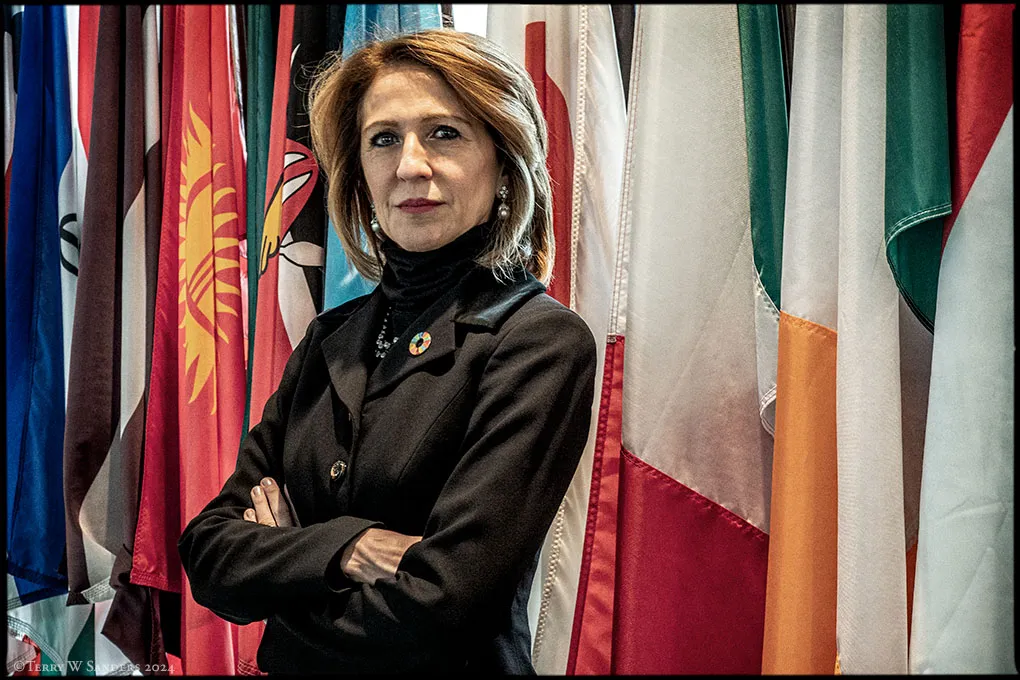
Read our new interview transcript below.
To mark International Women’s Day and Women's History Month 2025, the Academy once again looks at pressing current issues, in conversation this time with Roraima Andriani, Special Representative of the International Criminal Police Organization (INTERPOL) to the United Nations. (This is not an in-person event.)
Barbara Faedda, Executive Director of the Italian Academy, interviewed Ms. Andriani, who has more than 30 years of experience in law enforcement, including serving as a Brigadier General in the Italian Police (Polizia di Stato), and as Project Leader at the European Union Agency for Law Enforcement Cooperation (EUROPOL). Ms. Andriani has a law degree from the Università degli Studi di Bari in Italy and a master’s degree in geopolitics.
This interview transcript, published on March 1, is part of the program Women Leaders Now—Annual Events for Women's History Month and International Women's Day.
INTERPOL—which is 102 years old—is an international criminal-police organization that comprises 196 member countries. Ms. Andriani, could you briefly explain its mission, its organization, and its distinctive features?
Roraima Andriani
I would like to start by saying that in the public imagination, INTERPOL often conjures up images of secret agents, high-speed chases, and Hollywood-style arrests—something straight out of a James Bond film. But in reality, INTERPOL is entirely different. It is not a global police force with its own officers swooping in to make dramatic arrests. Instead, it is the backbone of international law enforcement cooperation, the only organization that enables 196 countries to work together seamlessly in the fight against transnational crime.
Today’s criminals operate in fluid, decentralized networks, often across multiple countries and even in cyberspace. They traffic drugs, humans, weapons, natural resources, and stolen art. They launder money through digital currencies and leverage technology to commit online fraud.
To keep pace, law enforcement must be just as interconnected—and this is where INTERPOL plays a crucial role. Through its secure global communication system, INTERPOL enables real-time sharing of intelligence. It coordinates operations targeting criminal networks and delivers specialized training to ensure that no country is left to tackle these threats alone.
One of INTERPOL’s most powerful assets is its set of 19 global criminal databases containing critical police information on criminal records, biometric data, wanted persons, stolen property, firearms, and emerging threats. Officers at key locations like airports and border crossings can instantly check and share information. INTERPOL also issues color-coded Notices to facilitate international cooperation on fugitives, missing persons, and security threats. This interconnected system ensures that criminals cannot easily evade justice by crossing borders.
To see INTERPOL in action, consider this real-life case: A routine police check in Bosnia and Herzegovina revealed a man traveling with a group of migrants, using a fake identity. Nothing seemed unusual at first—until officers ran his photo through INTERPOL’s biometric database. In seconds, it became clear that he was not just any traveler; he was a fugitive sought by another European country for human trafficking and organized crime. Thanks to INTERPOL’s data-sharing network, what could have been an unnoticed border crossing became an immediate arrest.
Or take the case of Luis Alejandro Ruiz Godoy, a high-ranking leader of Venezuela’s notorious “Tren de Aragua” gang. Last year, intelligence suggested he was traveling through Mexico toward the United States. INTERPOL’s General Secretariat swiftly flagged this information, and within hours, INTERPOL Washington coordinated with U.S. law enforcement. When he arrived in Tennessee—thinking that he had escaped the reach of justice—officers were already waiting to take him into custody.
Beyond supporting investigations, INTERPOL strengthens law enforcement capabilities worldwide. Through its Global Academy, it partners with leading universities and police academies to train officers in cutting-edge techniques such as crime analysis and digital forensics. Since its launch in 2019, this initiative has helped police forces stay ahead of evolving criminal threats, ensuring that even the most sophisticated criminals have nowhere to hide.
INTERPOL is not about movie-style takedowns. It is about empowering police worldwide with the right tools, intelligence, and cooperation to dismantle criminal networks, to battle terrorism, and to disrupt the illicit economies that fuel crime. In an era where crime knows no borders, INTERPOL ensures that justice doesn’t either.
In 2023, you were appointed INTERPOL’s new Special Representative to the United Nations, becoming the first woman to lead the office. Your arrival marked a strong commitment to addressing security through a broader lens—one that prioritizes the protection of the most affected, particularly women and youth. Can you share how this vision shapes INTERPOL’s work and partnerships?
RA
My vision is deeply personal: to forge an unbreakable link between security and sustainable development, knowing that crime does not just threaten stability—it shatters lives. The people most at risk bear the heaviest burden of violence and exploitation. Their suffering cannot be an afterthought; it must be at the center of our efforts.
This belief drives INTERPOL’s commitment to a victim-centered and human rights-based approach to policing, fully aligned with the UN Sustainable Development Goals and the 2030 Agenda.[1] Because justice is not just about enforcing the law—it is about restoring dignity, protecting the defenseless, and ensuring that no one is forgotten.
One of the most haunting aspects of violence against women is how many such women remain nameless, their lives erased by brutality, their stories left untold. INTERPOL’s Identify Me program exists to change that. It is a call to action—an international effort to bring justice for female murder victims who might otherwise remain unidentified, lost to time.
In the same spirit, INTERPOL’s partnership with UN Women ensures that law enforcement worldwide hears women’s voices and prioritizes their safety. Because no woman should have to live in fear, and no crime against them should go uninvestigated.
But the pain of injustice is not felt only by women. Children—innocent and defenseless—are among the most tragic victims of crime. INTERPOL’s International Child Sexual Exploitation (ICSE) database holds 4.9 million images and videos—each one a devastating snapshot of a stolen childhood. Yet, from this darkness, hope emerges. This technology has already helped identify over 49,349 victims and bring thousands of abusers to justice. And, through our partnership with UNICEF, we are strengthening global efforts to shield children from online exploitation, ensuring that no child’s suffering goes unnoticed.
Young people, full of potential, should never have to face the pull of radicalization or the grip of organized crime. Yet too many do. INTERPOL is working to change this—by researching the forces that lure youth into violence, equipping policymakers with the tools to intervene, and creating strategies that offer young people a future free from crime and extremism.
At INTERPOL, we are concerned with more than just security. It is about the world we want to build—one where women walk without fear, children grow up without trauma, and young people see a future filled with possibility, not danger. It is about justice, dignity, and the unwavering belief that a safer, fairer world is within our reach. And we will not stop until we achieve it.
You have 35 years’ experience in law enforcement, nationally and internationally. What does your Italian identity and background bring? What does your international experience add to this?
RA
I am Italian by nationality, but I was born to a Venezuelan mother, which gave me the privilege of growing up immersed in diverse cultures, traditions, and experiences. From an early age, I learned to navigate this cultural richness; it shaped me into a professional who is both internationally-minded and neutral.
That said, my Italian identity is a defining part of who I am and it has profoundly influenced my approach to leadership and international cooperation. Italy has a long tradition of excellence in law enforcement; it is renowned for its sophisticated investigative techniques, commitment to the rule of law, and ability to combat transnational crime. Italian professionals are known for their adaptability, strategic thinking and diplomatic finesse—qualities that have been essential in my career.
Beyond this, there is something truly special about being Italian on the international stage. The moment my interlocutors learn where I am from, smiles break out and the conversation flows effortlessly. Everyone, in some way, carries a piece of Italy in their heart—because of our history or our cultural heritage, which is present in every corner of the world. Italian masterpieces (from Michelangelo’s sculptures to Caravaggio’s paintings) are not just treasures of Italy; they are treasures of humanity. This shared admiration often serves as an unspoken link, sparking dialogue and fostering connections that go beyond professional matters.
Italy’s historical role as a bridge between cultures, its deep-rooted sense of justice, and its ability to find creative solutions to complex problems have shaped my management style. I firmly believe in empowering my team, fostering innovation, and maintaining a vision that is both pragmatic and forward-looking. This fusion of Italian expertise and international perspective has allowed me to lead with authenticity, resilience, and a deep commitment to tackling global security challenges.
BF
Law enforcement has traditionally been a male-dominated field, and there are likely to be tough challenges for women who want to be in it: gender biases, stereotypes, and prejudices. In recent decades, more and more women have chosen law enforcement as a career. What have the achievements been? What obstacles remain?
RA:
Women have indeed faced significant hurdles. Yet today, the landscape is shifting: more women are stepping up, taking on leadership roles, and proving that their presence in law enforcement is not just necessary but transformative.
The progress is undeniable. Many national agencies have worked to improve recruitment, participation, and leadership opportunities for women, and the results speak for themselves. Research, including hundreds of interviews with female officers worldwide, reinforces what studies have consistently shown: when women serve in law enforcement, security outcomes improve.
Women officers have played key roles in counterterrorism and insurgency operations, leveraging their unique ability to connect with local communities. They are instrumental in handling crimes against women and children—where their presence often leads to higher reporting rates of gender-based violence. Additionally, both male and female officers recognize that women are less likely to use excessive force, which helps to strengthen police-community relations and build trust.
Despite these contributions, women remain underrepresented. In some regions, women comprise (at most) 20% of law enforcement personnel, and those numbers are even lower in operational roles. Many women gravitate toward administrative positions, often due to societal expectations or the need for work-life balance. Unfortunately, this reinforces a cycle where people assume that women are not interested in fieldwork, limiting opportunities for growth and confidence-building.
Encouragingly, more women are making their way into middle management, though progress at the senior level remains frustratingly slow. Female leaders are essential—not just as decision-makers but as role models who challenge stereotypes and inspire younger officers to envision a future in leadership. Young women in law enforcement often report to me that seeing female mentors in senior positions motivates them to stay in the profession and aspire for more.
The path to gender equality in law enforcement is not just about representation—it’s about ensuring that women have meaningful roles and real opportunities to contribute.
INTERPOL and the wider international community have a crucial role to play in keeping these issues high on the agenda, offering training and creating spaces where women can thrive.
But change must also come from within. Women in law enforcement must believe in their own potential, cultivate confidence, and claim their rightful place at the table.
This resonates with me on a personal level. My career has taken me on an unexpected journey, full of diverse responsibilities, challenges, and, at times, some low blows. Yet, I have always chosen to stay the course—letting my professionalism and tenacity speak for themselves, and never engaging with provocations. The same holds true for women in law enforcement.
When “we see it, we can be it” —by forging ahead, we create a path for others to follow.
The road may not always be easy, but every step forward strengthens the foundation for future generations.
BF Can you talk about INTERPOL’s policies that support the recruitment and employment of women? How do you train staff on particularly sensitive topics such as gender diversity and cultural diversity?
RA
For the past six years, INTERPOL has focused heavily on developing a Gender Responsive Policing Program to help support women in law enforcement. The goal is twofold:
- to create the next generation of women leaders who will have a key role in tackling transnational organized crime and other global challenges;
- to help shape law enforcement agencies that are truly gender-responsive in how they operate and serve communities.
This program was developed in response to the needs shared by our member countries, particularly by female officers across various areas of law enforcement. We’ve created resources—some of which are still being developed—to provide an institutional framework and toolkits for integrating gender mainstreaming[2] into every aspect of INTERPOL’s training and capacity-building work. This ensures we’re helping to build law enforcement services that are more inclusive, equitable, and effective.
We’ve also launched regional projects in places like Southeast Asia, Central Asia, Africa, the Americas, and the Middle East and North Africa region. These projects are providing mid-career female officers with technical training in areas like cybercrime prevention, investigations, and INTERPOL’s own policing capabilities.
In addition to these efforts, we’ve also developed several key initiatives to support the development of female leaders in law enforcement:
- A Leadership Training Course designed to ensure we have a strong pipeline of qualified women ready to take on leadership roles, lead international cooperation, and drive institutional change in the future of policing.
- A Professional Fellowship/Study Visit Program that gives female officers the chance to spend 12 weeks working alongside INTERPOL’s departments, honing their skills and gaining valuable insights.
- A collection of eLearning resources on gender, security, and transnational organized crime, all available through INTERPOL’s Virtual Academy in multiple languages.
- A training package on gender-responsive policing and leadership, offering practical tools for managers to apply gender considerations in their teams (currently being finalized).
Our network of over 900 gender champions—both women and men—has grown significantly, and we’re working closely with global partners like the United Nations and the International Association of Women in Police to ensure this work reaches as far as possible.
At the end of the day, building capacity in law enforcement isn’t just about training officers—it’s about fostering the right attitudes and values that lead to a more inclusive and effective police service. A diverse workforce brings in new perspectives that are critical for tackling complex security issues and more reflective of the communities they serve.
It is a real challenge to work amid a variety of legal systems across nations. How do you interact with local and national and international legislations, especially regarding women’s rights?
RA
Working across a variety of legal systems is indeed a challenge, but as an independent international organization, INTERPOL has developed a unique legal framework to guide its operations and ensure compliance with national and international legislations, including those concerning women’s rights. As outlined in INTERPOL’s Constitution, the organization is committed to respecting the sovereignty of its Member States and adhering to the principles of the Universal Declaration of Human Rights. This means that INTERPOL ensures that well-established international law norms concerning women’s rights are respected in all its activities.
In the context of INTERPOL’s primary area of work, namely exchange of data among 196 member countries for the purpose of promoting international police cooperation, the Organization has put in place a modern and elaborate legal framework. INTERPOL’s Rules on the Processing of Data (RPD), which were adopted in 2011 and are regularly updated, regulate all data exchanged within INTERPOL systems. These rules ensure compliance with evolving international data protection standards while preserving the sovereignty of Member States over the information they contribute.
As defined by the RPD, the data shared by national law enforcement agencies remains the property of the respective Member States, and INTERPOL cannot transmit or share such data without the explicit authorization of the concerned Member State. Additionally, and in application of the principle of national sovereignty, it is up to each country to decide whether to cooperate with a request from another country: INTERPOL cannot force any country to take action (e.g., to arrest a person) or share information.
Each request for international police cooperation sent via INTERPOL’s channels must comply with the national legislation of the requesting country but must also respect obligations under international law. Accordingly, while INTERPOL does not have the mandate to require its member countries to amend their national legislation or to pass judgment on such legislation, if INTERPOL considers that a certain request does not meet international law standards (for example well-established women’s rights) it will decline the request and inform the requesting country that it may not use INTERPOL’s channels in the particular case.
To establish whether a certain request indeed adheres to international standards, INTERPOL’s General Secretariat regularly examines developments under international law. This includes international and regional conventions as well as decisions of international and regional human rights courts and bodies. The Organization might deny a request for police cooperation—for instance, if it is asked to publish an INTERPOL Red Notice with a view to seek the arrest of a wanted person—if it concludes that the underlying criminal proceedings in the requesting country entail discrimination against women. Such a conclusion might arise because of conventions such as the International Covenant on Political and Civil Rights (ICCPR) or the Convention on the Elimination of All Forms of Discrimination Against Women (CEDAW) and the interpretation of such conventions by bodies such as the Human Rights Committee or the Committee established under CEDAW.
INTERPOL’s approach to police information exchange is key to maintaining a balance between international cooperation and respect for international and national laws. In conclusion, INTERPOL has established a robust legal framework that allows it to navigate the complexities of various national and international legislations. This framework ensures effective international cooperation while maintaining respect for national sovereignty and human rights, including the rights of women, making INTERPOL a key player in global law enforcement.
BF
Human trafficking—especially of women and children—is an international phenomenon. It is often difficult to detect, mainly because we don’t have reliable, high-quality data. How do you operate in this regard? How do you manage to be effective in such a complex criminal context?
RA
In the fight against human trafficking, data serves as a critical tool for law enforcement to identify patterns, track criminals, and prevent offenses. That is why INTERPOL has provided secure and vetted channels for countries to share and access the critical data needed for transnational investigations. Our well-established secure communications platform, I-24/7, allows real-time access to 150 million records. Last year alone, INTERPOL’s databases were accessed over 8 billion times by national law enforcement agencies, which is equivalent to 250 searches per second globally.
Beyond data-sharing, INTERPOL applies intelligence-led operations to effectively disrupt networks of human trafficking. By analyzing trends and patterns within our databases, we support law enforcement in targeting key criminal actors and identifying the most vulnerable groups, including women trafficked for sexual exploitation and unaccompanied children at high risk of abuse.
Operations like Liberterra II, our largest-ever action against human trafficking and migrant smuggling, exemplify this approach. Conducted across 116 countries, it led to 8 million checks against our databases, the rescue of over 3,000 potential victims, and the identification of more than 17,000 irregular migrants.
Recognizing the inherently gendered nature of this crime, INTERPOL integrates a strong gender perspective into its projects, ensuring that operations and capacity-building initiatives address the specific vulnerabilities of women and girls. At the same time, unaccompanied children remain a particular focus, as they are among the most defenseless victims of trafficking.
Do you have a specific message for young women—American, Italian, and from all over the world—who wish to work in international policing professions?
RA
I want to encourage all young women to consider careers in international policing and law enforcement. Over the past 35 years, this profession has given me an unparalleled sense of purpose and the ability to make a tangible impact on global security. From tackling organized crime to shaping international policies at the United Nations, my journey has shown me that law enforcement is not just about enforcing laws—it’s about protecting communities, upholding justice, and driving meaningful change.
I also want to emphasize the importance of embracing who you are. Women bring critical strengths: empathy, resilience, emotional intelligence, ability to mediate and build trust, and a unique perspective that is essential for modern policing. These are powerful assets that enhance our ability to lead, negotiate, and solve complex problems.
When I became the first woman appointed as INTERPOL’s Special Representative to the United Nations, I knew that breaking barriers was not just about reaching new heights—it was about opening doors for others. I urge young women to step forward with confidence, knowing that they are not only capable but also essential for shaping the future of global security. The world needs your leadership, your perspective, and your courage. If you are ready to take on the challenge, there is no limit to what you can achieve.
[1] Sustainable development goals: https://sdgs.un.org/goals; 2030 Agenda: https://sdgs.un.org/2030agenda
[2] UN Women defines “gender mainstreaming” as the intergovernmentally agreed global strategy for achieving gender equality.
International Women's Day 2024
Interview with Anna Grassellino, Director of the National Quantum Information Science SQMS Center and a Fermilab Senior Scientist
International Women's Day 2023
Interview with Professor Elena Cattaneo, a co-founder and director of the University of Milan’s Center for Stem Cell Research, Senator for life in the Italian Parliament.
Interview with Photini Pazartzis, Chair of the UN Human Rights Committee
International Women's Day 2022
Interview with Claudia Tebaldi, Climate Scientist
Interview with Representative Christina Haswood
International Women's Day 2021: On Violence Against Women
Interviews with Senator Valeria Valente and Professor Marina Calloni