The Renaissance in Natural Light: Photographs by Vincenzo Castella from the ICCD Collection in Rome
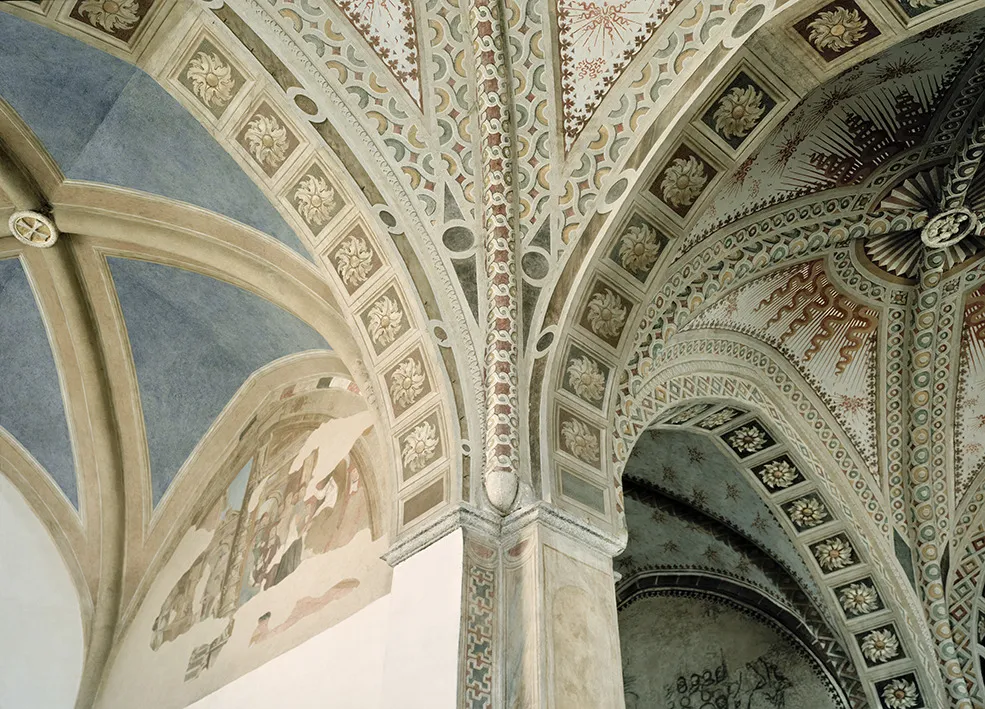
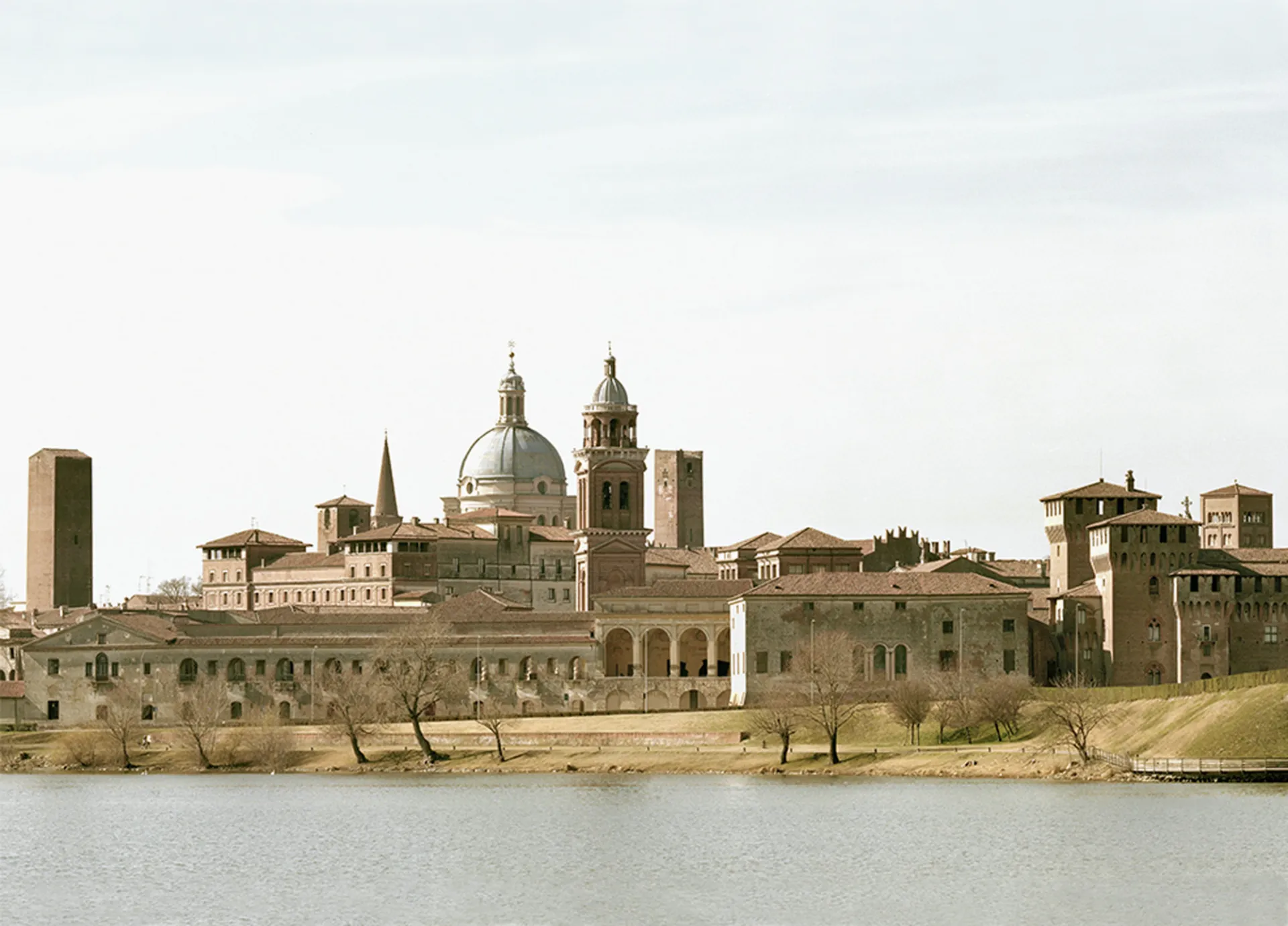
Fresh perspectives on five iconic Italian sites: in Venice, the church of San Giorgio floats up from the lagoon. In Florence, the cathedral’s imposing dome curves into the sky. In other cities, other exemplars of the Renaissance unfold their treasures: Milan’s Santa Maria delle Grazie church, Pavia’s Certosa monastery, and Mantua’s Sant’Andrea basilica. Vincenzo Castella—a compelling master of contemporary photography—takes the viewer on a voyage of discovery.
These portraits of religious structures are as clear and direct as a Dutch painting, because Castella uses natural light, large-format negatives, and a meticulous printing process. He deliberately avoids the convention of immortalizing the “masterpiece” locale and focuses instead on evocative features. The exhibition alternates panoramic views with architectural details to build a meditative journey that is anchored in reality.
Register here.
This registration is for the opening reception: Nov. 17, 6 PM – 7 PM.
After that day, the exhibition will remain open and NO registration will be needed. Opening hours will be weekdays, 10 AM – 4 PM, throughout the semester.
ABOUT THE PHOTOGRAPHER
Vincenzo Castella (Naples, 1952) lives in Milan. After graduating with a degree in Anthropology, he began photographing in 1975, inspired by the Americans Charles Sheeler, Paul Strand, and Walker Evans. Driven by the conviction that the photographic medium could produce images different from those appearing in magazines, Castella began using it conceptually, contributing to the evolution of photographic language—a movement that reached a pivotal milestone in 1984 with Luigi Ghirri’s “Viaggio in Italia” project, in which Castella participated. From the late 1990s, Castella introduced elevated vantage points and large-format color photography, anticipating a trend in contemporary photography that went on to define an entire generation of artists. His famous aerial views of European cities date back to these years, investigating themes of distance and dislocation with a strongly non-narrative approach. Since 2006, Castella has created installations from large-format photographic negatives. A key example is Cronache da Milano, presented at Art Unlimited in Basel in 2009, in which the movements of a virtual camera reproduce a complex reading of the photograph itself and the relationships between the visible and invisible. His works have been exhibited in major exhibitions and are held in public and private collections in Italy and abroad, including MAXXI in Rome, MUNAF in Cinisello Balsamo (Milan), the Fondazione Sandretto Re Rebaudengo in Turin, the Tate Modern in London, the Museum of Fine Arts, Houston, and the Venice Biennale. In 2023, a major retrospective of his work was held at the Triennale di Milano. https://www.vincenzocastella.com/
THE CONTEXT FOR THIS EXHIBITION
This event is part of the Academy's International Observatory for Cultural Heritage (IOCH), established in 2016 by Executive Director Barbara Faedda and dedicated to the preservation, conservation, and study of cultural heritage.
To mark its 10th anniversary, the IOCH has presented events focused on the post-earthquake reconstruction of L’Aquila, on fashion museums and material culture, and on Italian cooking as a UNESCO treasure (while preparing for upcoming events addressing Pompeii, Sardinia, and the Grand Tour of Italy). This display of Castella’s works here is the first of a series of initiatives with Italy’s ICCD—the Istituto Centrale per il Catalogo e la Documentazione (Central Institute for Cataloguing and Documentation)—an office within the Ministry of Culture that develops national standards and tools for the cataloguing and documentation of archaeological, architectural, art-historical, and ethno-anthropological heritage. The ICCD’s photography collection was launched in the late 19th century to document Italy’s cultural heritage for preservation purposes; the Institute now has approximately 6 million photographic prints and houses one of the most significant public photography collections in Italy. This exhibition was developed as the culmination of the ICCD’s project to acquire, conserve, and promote a body of 50 photographic works by Vincenzo Castella—works acquired thanks to funding from the Directorate-General for Contemporary Creativity of the Italian Ministry of Culture.
CO-SPONSOR
ICCD (Central Institute for Cataloging and Documentation), Rome
CURATOR
Francesca Fabiani, Head of the Contemporary Photography Department at ICCD
This event marks the 10th anniversary of the Academy's International Observatory for Cultural Heritage
DETAILS ABOUT THIS BODY OF WORK
In this project, the architecture, sculptures, and paintings are rendered with the clarity of a Dutch painting; they are stripped of artifice and presented quite purely, in natural light. This approach to depicting reality is born from Castella’s philosophy (which serves as an ethical and theoretical framework): to minimize the presence of the photographer and thus make room for the subjects themselves, without interference, so that they may reveal who they are. “My idea is to construct an image almost without my gaze: eliminating metaphors, which means removing the cult of personality of the gaze.”
This is an approach that translates into very specific choices both during his shooting—large format, color, natural light, and perspective—and during his printing. His exploration does not aim to produce flashy results (you will never find theatrical effects, daring perspectives, or exaggerated contrast in Castella’s work); instead, it is designed to display a method: “I’m not interested in the photographic hunt for the image, for the single, beautiful shot.” The color and substantial scale of his prints produced from large-format negatives are not decorative gimmicks, but necessary steps toward framing the world in this manner. The accuracy of the printing and the quality of the details are fundamental parts of Castella’s process; they reflect his fascination with the material matter of the visible world—be it wood, marble, water, or air.
Images of Santa Maria delle Grazie church, Milan; Sant’Andrea basilica, Mantua; Vincenzo Castella ©ICCD Collection, Rome