Music of the Italian Jewish Baroque, and 3 World Premieres by Oded Zehavi
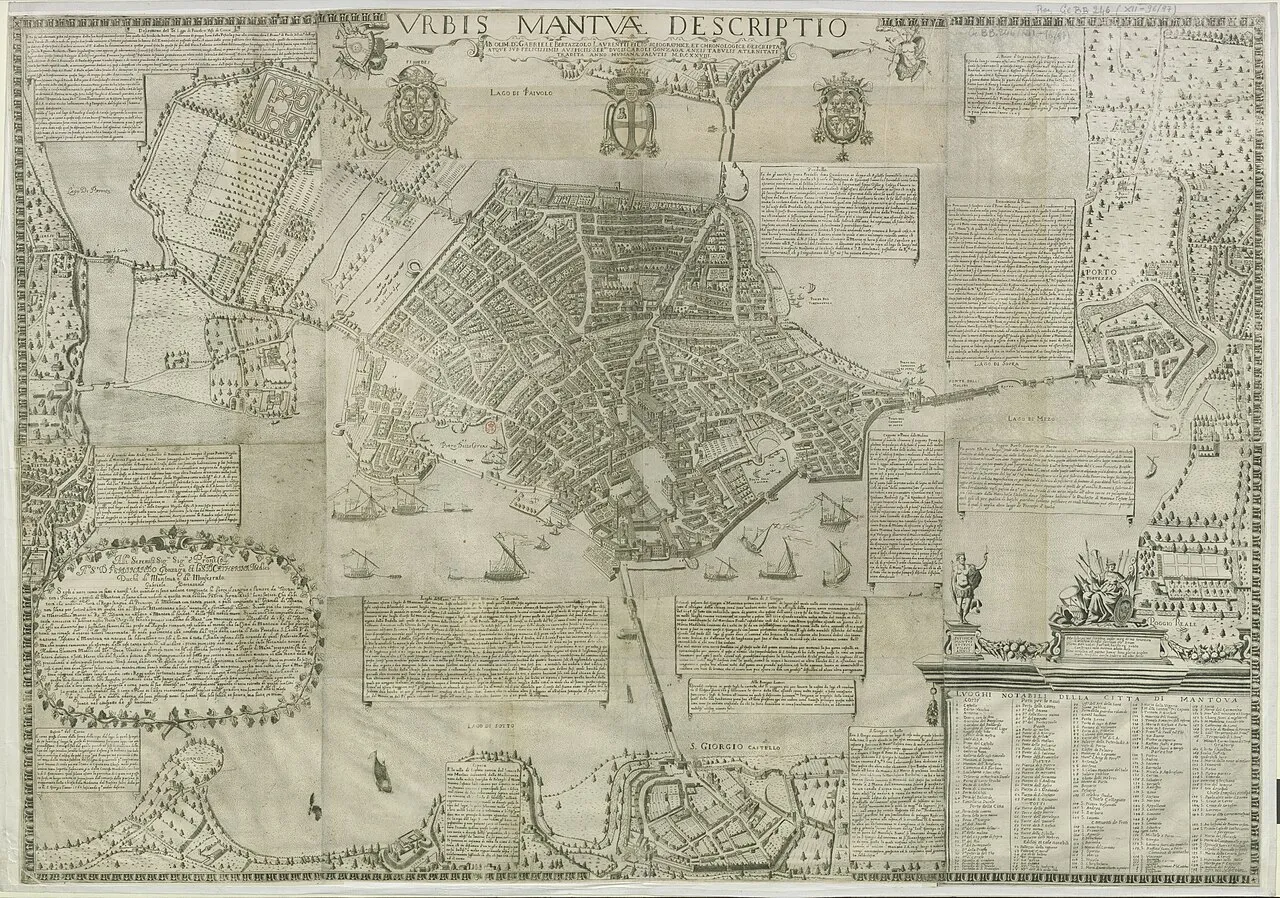
This concert presents selections from Salamone Rossi’s compositions—vocal music in Italian and Hebrew as well as instrumental works from the 1620s—together with world-premiere performances of three songs by Israeli composer Oded Zehavi set to poetry by Leone Modena.
Rebecca Cypess is the founder and director of the Raritan Players, known for their acclaimed past performances at the Italian Academy: In the Salon of Angelica Kauffman and Music as Discovery in Galileo's Italy. In this concert, the ensemble teams up with Bass-Baritone Ian Pomerantz, a specialist in both early music and Jewish music, to explore the music of Salamone Rossi and his supporter, the rabbi and cantor Leone Modena. Cypess and Pomerantz will also premiere three songs by Israeli composer Oded Zehavi set to texts by Modena.
The Raritan Players
Ian Pomerantz, Bass-Baritone
Dongmyung Ahn, Violin
Gersh Chervinsky, Violin
Charles Weaver, Theorbo
Rebecca Cypess, Harpsichord
Click here to register.
ABOUT THIS PROGRAM
Salamone Rossi’s Hebrew compositions, Ha-Shirim Asher Li-Shlomo (The Songs of Solomon, 1622–23), were published together with two lengthy essays by the rabbi, cantor, and community leader Leone Modena: one preface justifying the use of polyphonic music in synagogue and another outlining how and why Rossi wrote the Shirim. Rossi, a Jewish composer and string player active in the musically innovative city of Mantua, sought to bring to the synagogue the same musical creativity that he offered to the ducal court of the Gonzaga family and the city at large. As Modena explained, Rossi’s Shirim constituted an effort to reclaim the art of music as practiced by the Jews in the ancient Temple and breathe new life into it for Mantua’s vibrant and musically active Jewish community.
PEOPLE
The Raritan Players offer “incomparable musicianship” (Early Music America) and playing that is “as ravishing as it is fascinating” (Classical Music).
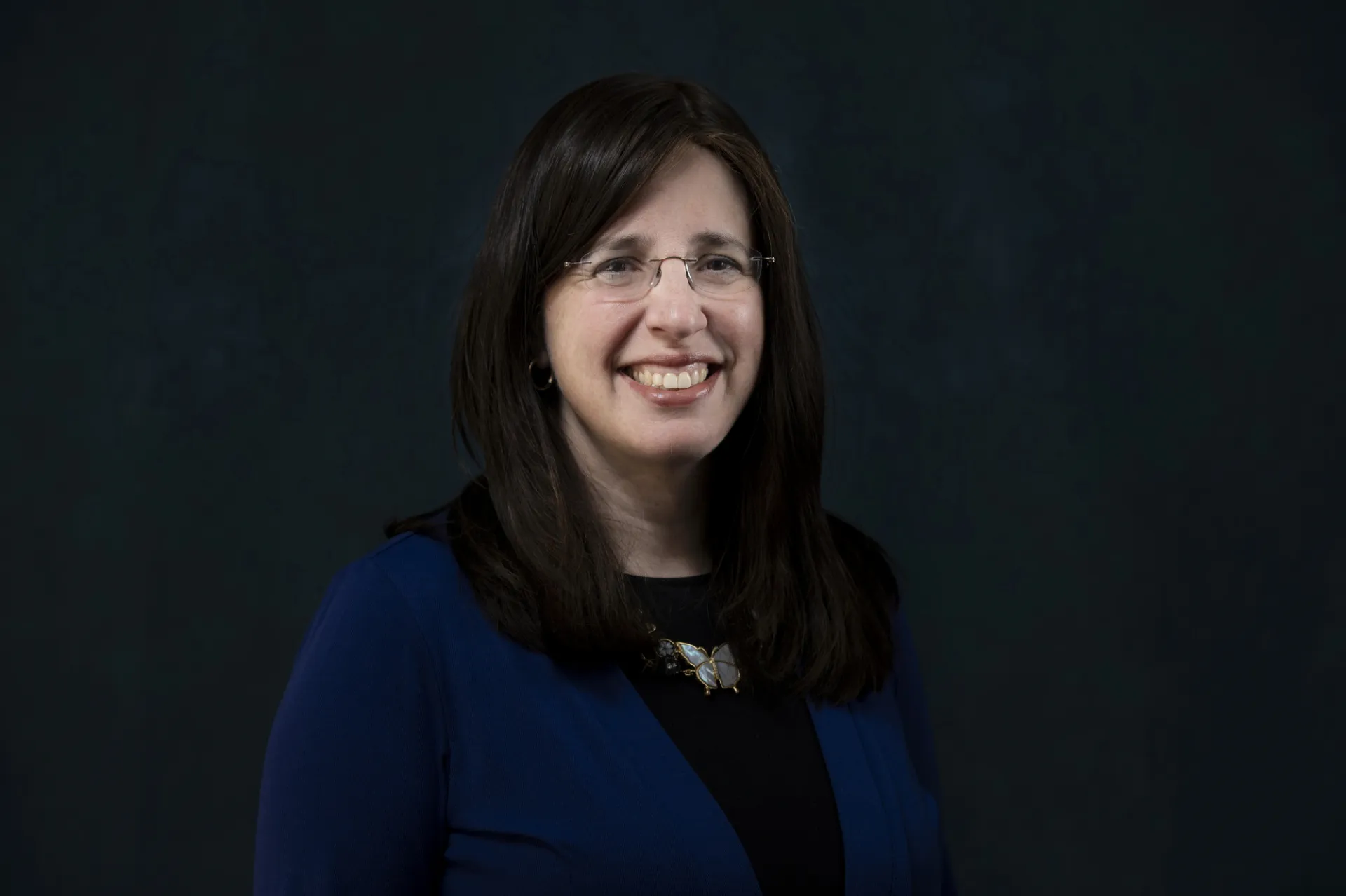
Early strings specialist Dongmyung Ahn is a performer, educator, and scholar whose interests span from the twelfth to eighteenth centuries. She regularly performs with Pegasus, Raritan Players, The Sebastians, and TENET Vocal Artists. She played rebec in the critically acclaimed production of the Play of Daniel at the Cloisters. A dedicated educator, Dongmyung teaches music history at Columbia University, New York University, and Queens College. Dongmyung earned her Bachelor of Music with high distinction and her Master of Music from Indiana University where she studied baroque violin with Stanley Ritchie. She received her PhD in musicology at the Graduate Center, CUNY, and has published articles on medieval liturgy and Jewish-Christian relations in Henry VIII’s court, and a book review on gender and voice in the Journal of the American Musicological Society. She has also written an essay for Huffington Post about her experience as a stuttering music history professor.
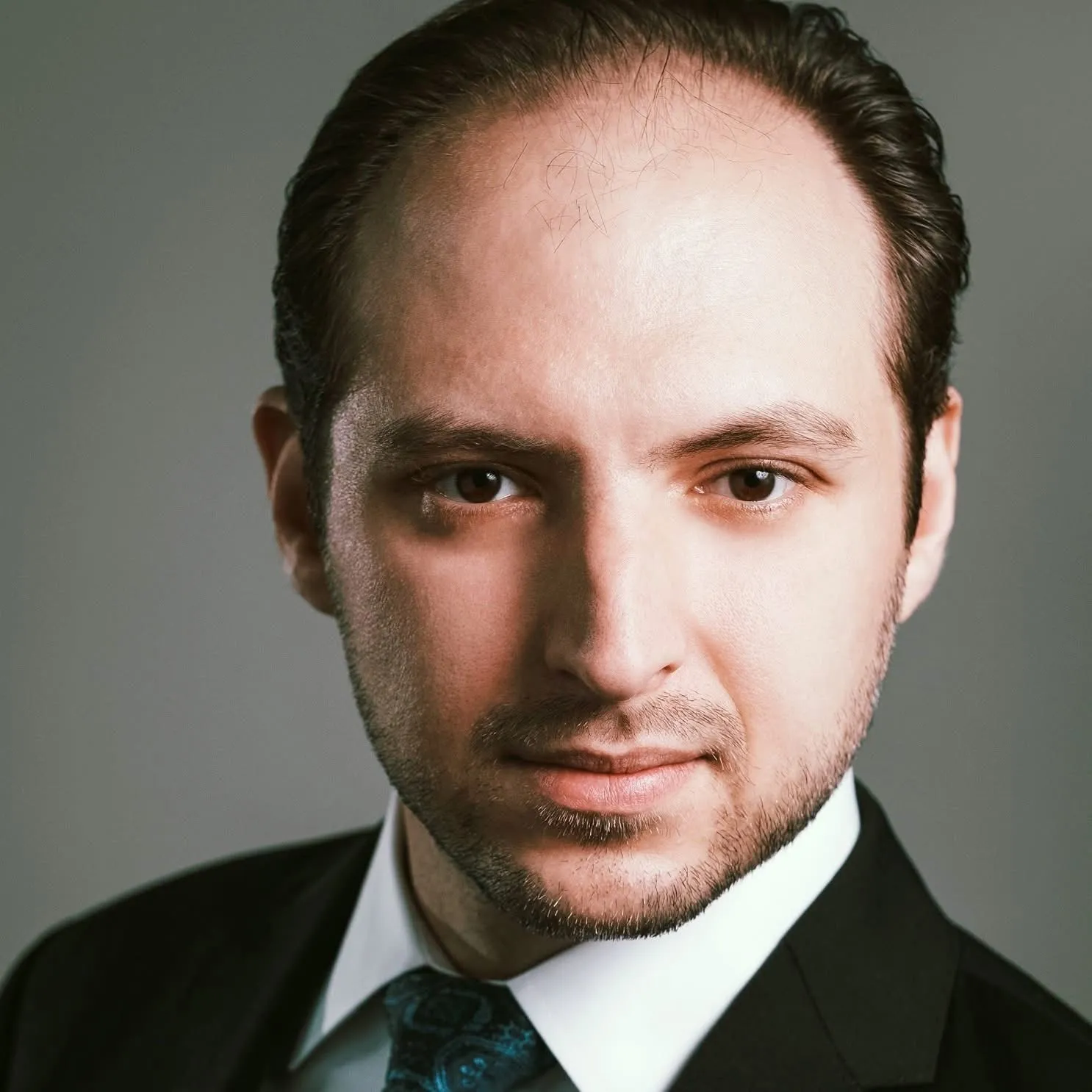
Gersh Chervinsky is a professional concert violinist and violin teacher based in Rockville, Maryland. He is the second-award winner of the Cremona Festival and Competition (Italy, 2012), and was a participant in the London Purcell School Music Festival (England, 2013), and the Keshet Eilon Festival (Israel, 2019). He has performed with star musicians such as Joshua Bell, Norman Kreeger, Sarah Daneshpour, and Amit Peled, among others. Gersh played at the masterclasses of renowned violinists such as Guillaume Sutre, Sergey Ostrovsky, Paul Roczek, Eszter Haffner, Vadim Gluzman and Haim Taub. He collaborates with the premier DC baroque ensemble Washington Bach Consort. Trained at the Moscow Conservatory, Indiana University Jacobs School of Music, and Peabody Institute of Music, he exhibits the finest traditions of modern and baroque violin playing. Gersh is an enthusiastic educator with extensive teaching experience. He has taught college students at Jacobs School of Music as an associate instructor of violin. He also taught exceptionally gifted pre-college students at the IU Summer String Academy. He teaches at his private studio in Rockville, MD.
Rebecca Cypess is Vice Provost for Undergraduate Education and Dean of Liberal Arts and Sciences at Yeshiva University. A historical keyboardist and scholar, she frequently presents recitals and lecture-recitals based on her current research, with recent performances at venues such as the American Philosophical Society, the Bloomington Early Music Festival, the Center for Jewish History, Duke University’s collection of historical instruments, the “Chamber Music Live” series at Queens College, and many others. In addition to her work as a performer, Cypess is the author of Curious and Modern Inventions: Instrumental Music as Discovery in Galileo’s Italy (University of Chicago Press, 2016); Women and Musical Salons in the Enlightenment (University of Chicago Press, 2022); and over 40 peer-reviewed articles and book chapters. She is co-editor of the volumes Sara Levy’s World: Gender, Judaism, and the Bach Tradition in Enlightenment Berlin (University of Rochester Press, 2018) and Music and Jewish Culture in Early Modern Italy: New Perspectives (Indiana University Press, 2022). She is founder and director of the Raritan Players, who have performed several times at the Italian Academy (In the Salon of Angelica Kauffman, Music as Discovery in Galileo’s Italy).
Ian Pomerantz is a bass-baritone, hazzan, and musicologist specializing in Jewish and Early Modern repertoires. He appears regularly in historically informed performances and has collaborated with leading ensembles including the Washington Bach Consort, the Boston Early Music Festival, and others. His recordings with the Washington Bach Consort include Myths Contested, a studio project exploring myth, narrative, and transformation in Baroque vocal music.
His discography reflects a sustained commitment to underrepresented Jewish vocal repertoire. His recent debut solo album, Art Songs of the Jewish Diaspora, recorded with pianist Byron Schenkman, is complemented by a forthcoming album of songs by the 19th-century Anglo-Jewish composer Harriett Abrams, recorded with harpsichordist Rebecca Cypess, many of which appear on record for the first time. He also appeared in the first Dutch performance of Lidarti’s Esther at Amsterdam’s Royal Concertgebouw, bringing a rare Jewish late Baroque oratorio to one of Europe’s most iconic stages.
Alongside his performance career, Pomerantz is a scholar and educator teaching Judeo-Spanish language, also known as Ladino, at the National Institute for Oriental Languages and Civilizations (INALCO) in Paris. His research examines music as cultural memory within Jewish diasporic communities, with particular attention to language and the relationship between oral tradition, archival sources, and living performance. He is also active as a curator and music director, including directing the Baroque 350th-anniversary concert series at the Portuguese Synagogue of Amsterdam and co-directing A Song of Dedication with the Washington Bach Consort.
Charles Weaver is on the faculty of the Juilliard School, where he teaches historical music theory, historical ear training, plucked-string instruments, and music history. He holds a PhD in music theory from the City University of New York. His research interests include the rhythm of Gregorian chant and the history of the theory of harmony. He serves as editor of the journal Sacred Music, published by the Church Music Association of America, which, as a continuation of the nineteenth-century journal Cecilia, is the longest-running musical periodical in North America. He is organist and choirmaster at St. Mary’s Church in Norwalk, Connecticut, where he specializes in the liturgical performance of medieval and renaissance music. He has been assistant conductor for Juilliard Opera and has directed opera productions for Dell’Arte Opera and the Yale Baroque Opera Project. He has also played continuo in opera productions at the University of Maryland, the Cleveland Institute of Music, Princeton University, and the Boston Early Music Festival. As a collaborative musician, he has performed with the Orchestra of St. Luke’s, the New York Philharmonic, the Philadelphia Orchestra, the Minnesota Orchestra, and the Virginia Symphony. In addition to being a regular member of the ensemble Quicksilver, his chamber-music projects have included engagements with Piffaro, Chamber Music Society of Lincoln Center, the Folger Consort, Apollo’s Fire, Blue Heron, the Newberry Consort, and Musica Pacifica. He also once arranged Saint-Saëns’s “Swan” for cello and theorbo and accompanied Yo-Yo Ma at a gala performance for Orchestra Lumos.
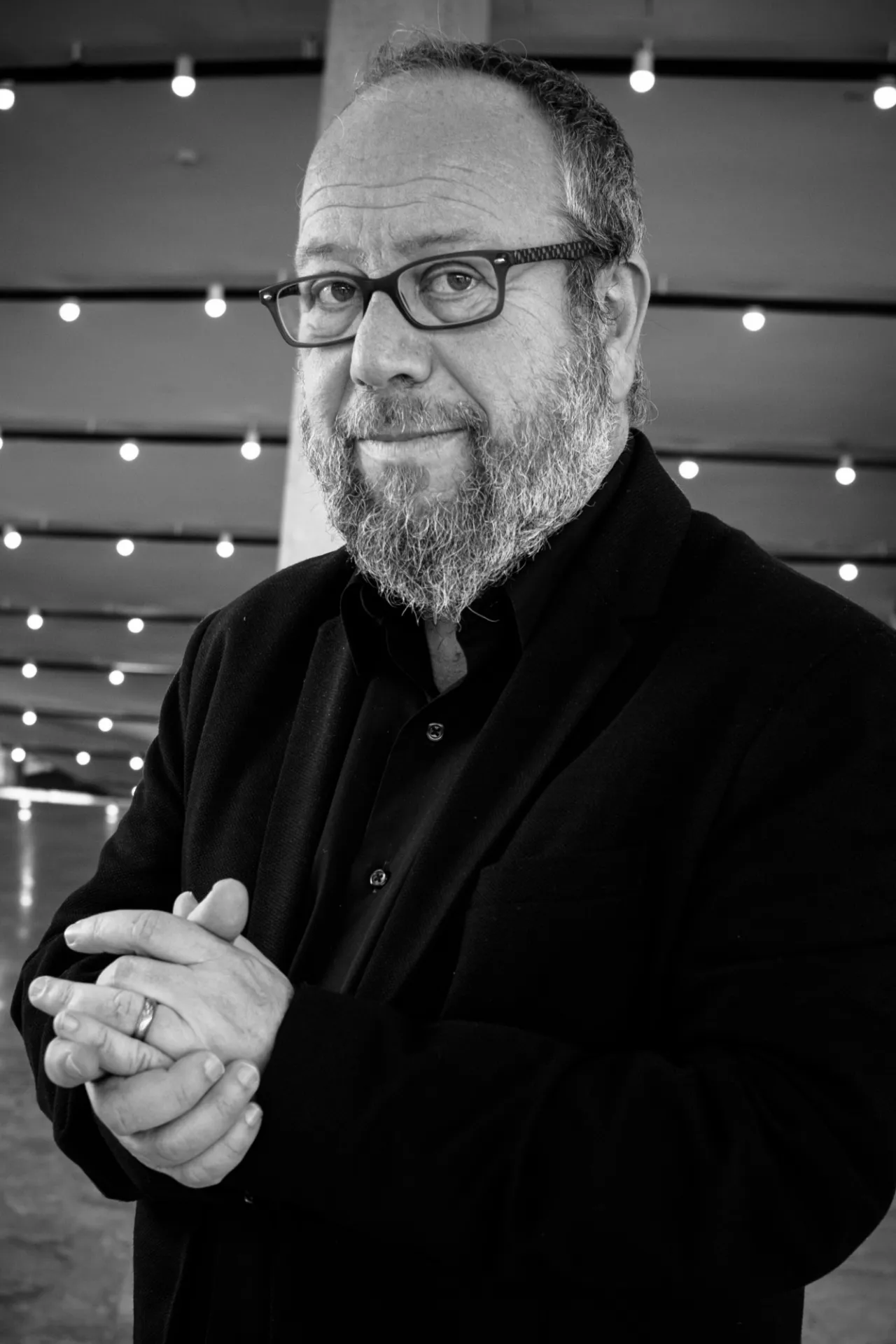
Israeli composer Oded Zehavi was born in Jerusalem in 1961. He is well versed in a wide variety of musical styles (pop/rock arrangements, soundtracks, electronic, chamber and orchestral music) and is renowned for his vocal scores and textual affinity for classics of Hebrew literature. His music has been premiered by a number of prominent musicians such as Zubin Mehta, Valery Gergiev, Marek Janowsky, Antonio Pappano, Ilan Volkov, Yoel Levi, Christian Lindberg, David Robertson and Nimrod David Pfeffer. His first concerto for piccolo and orchestra was premiered by the Cleveland Orchestra in Severance Hall in 2024: a commission by its principal piccolo Mary Kay Fink under the baton of Fabio Luisi.
He is the recipient of numerous prizes and residencies, including the Schusterman Visiting Artist Residency (Case Western Reserve University and Cleveland Institute of Music, Ohio, USA) and Prime Minister’s Prize for Composition (Israel). Other awards include a research fellowship at the Frankel Institute for Jewish Studies at the University of Michigan-Ann Arbor, Barlow Foundation Award (USA), Annenburg Trust (USA), National Endowment for the Arts (USA), Prime Minister’s Prize (1995), Landau Prize for Stage Arts and the City of Tel Aviv-Jaffa’s Engel Prize.
Zehavi was awarded the Bachelor’s degree in music from the Jerusalem Rubin Academy of Music and Dance under composers Andre Hajdu and Mark Kopytman. In 1986 he moved to the United States to begin graduate studies with George Crumb at the University of Pennsylvania. He completed doctoral studies with Sheila Silver at the State University of New York at Stony Brook, earning a PhD in 1992. He subsequently returned to Israel and served as a senior lecturer at a number of academic institutions before accepting the position of Professor of Music at Haifa University, where he founded the Department of Music. He resides in Tel Aviv with his wife and two children.
Doors open at 6:30pm. Registration does not guarantee a seat; registrants are seated first-come, first served.
This event is in-person only.